
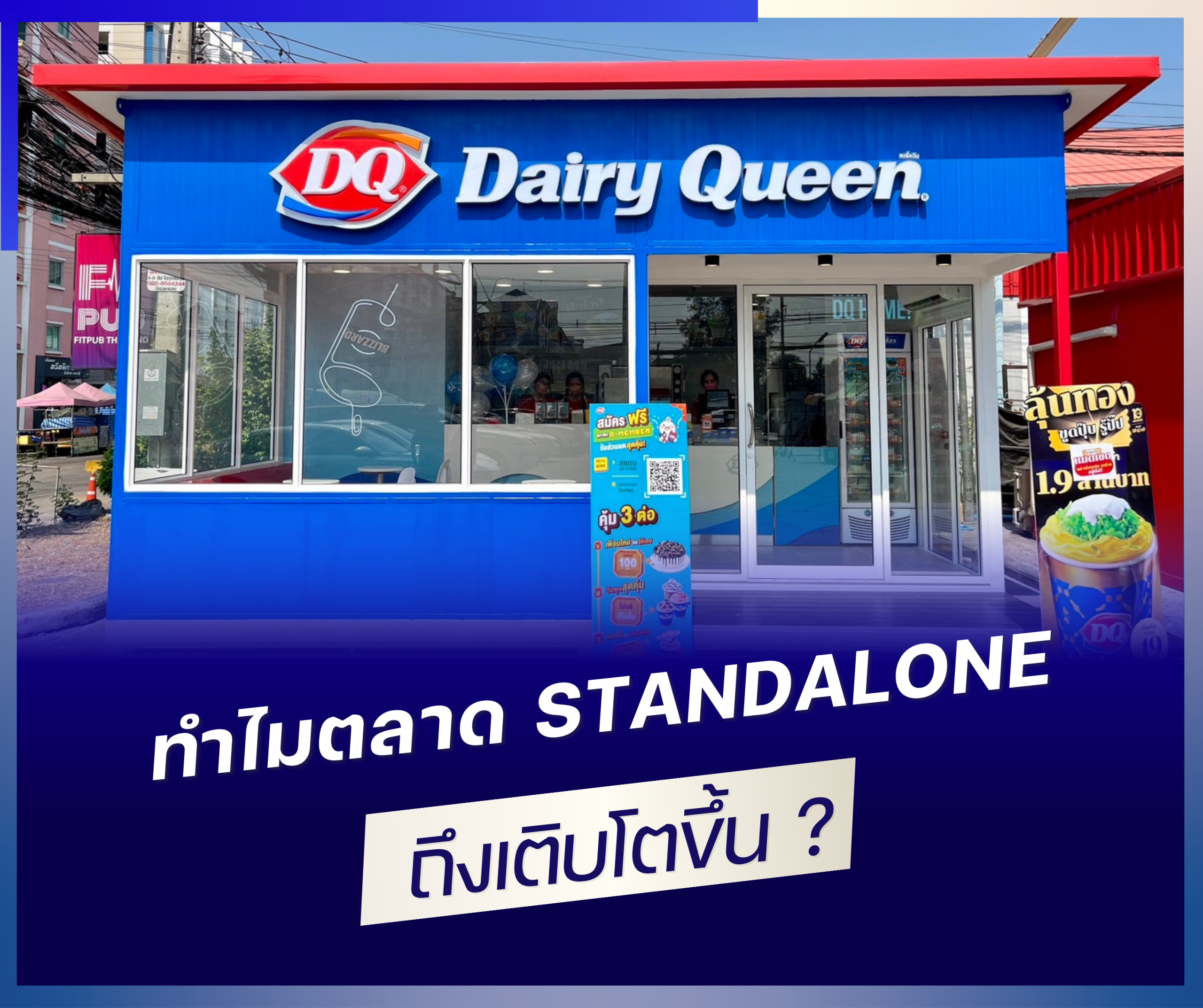
Why the Standalone Market is Booming
And why many brands are “stepping out of the mall” — with Modular Construction as the key solution.
If we look back just a few years, the image of retail stores, restaurants, cafes, or famous brands was almost entirely tied to “Shopping Malls.” If you wanted to open a shop, you went to a mall. If you wanted visibility, you had to be in a shopping center. But today, that picture is changing significantly. We are seeing a surge of brands “walking out of the mall” to set up on roadsides, in residential communities, in front of housing projects, or even alongside convenience stores.
The big questions are: What is driving the growth of the Standalone market? Why are even major brands choosing this path? And why has Modular Construction become the ultimate construction solution for Standalone stores today?
Rising Mall Costs: A Catalyst for Re-thinking
The first unavoidable factor is Cost. For many retailers, the cost of being in a mall no longer aligns with actual profits. These include:
- Continuously increasing rental rates.
- Gross Profit (GP) sharing requirements.
- Store decoration costs that must meet strict mall standards.
- Hidden expenses that are difficult to control.
For small-to-medium enterprises, being in a mall is no longer just an “opportunity”—it has become a “business risk.” Conversely, Standalone stores empower entrepreneurs to:
- Select their own locations.
- Determine store size based on budget.
- Better control construction and rental costs.
This is precisely where Modular Construction enters as a critical answer.
Reclaiming “Brand Identity”
While malls offer high foot traffic, they come with limitations in design and experience. Many brands feel that even if they can sell products, they cannot fully “be themselves.” Standalone stores provide a space where brands can tell their stories to the fullest:
- Designing stores with a unique character.
- Creating a memorable atmosphere for customers.
- Adjusting store functions based on customer behavior.
In an era where customers don’t just buy products but buy “Experiences,” stores outside the mall have become Destination Stores—places people intentionally travel to visit, rather than just passing by. Modular construction allows these Standalone shops to be designed freely and built rapidly without long on-site delays.
Changing Consumer Behavior: Convenience Closer to Home
Consumers are spending less time in malls and prioritizing:
- Stores near home or work.
- Easy parking.
- Quick “Grab & Go” experiences.
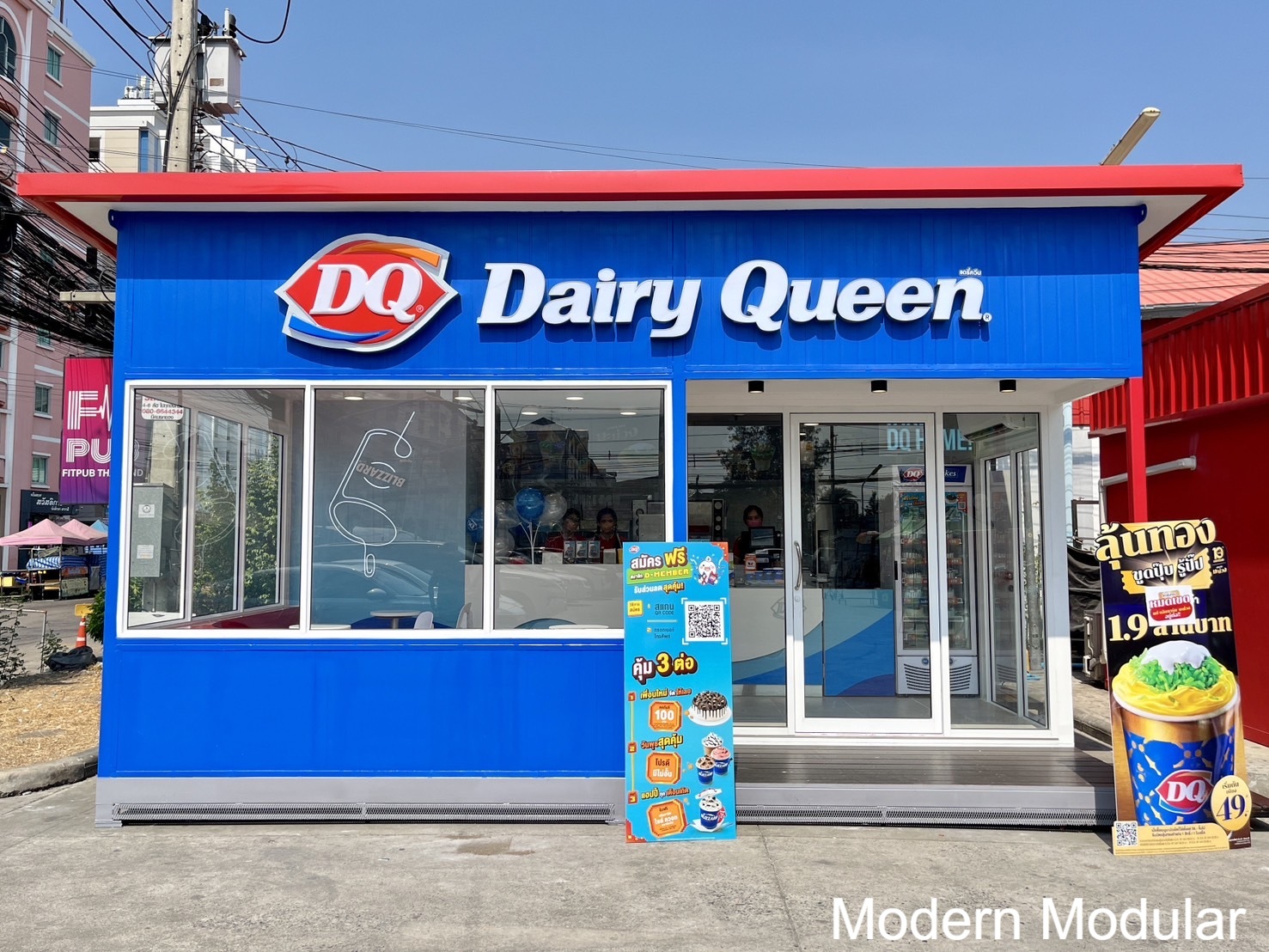
Standalone stores in communities have an advantage because they don’t rely on random foot traffic; they build a loyal customer base from the local area. Using Modular Buildings or prefabricated units allows entrepreneurs to:
- Open shops faster.
- Test new locations easily.
- Expand branches according to actual demand.
Social Media: Location is No Longer Limited to the Mall
In the past, a store had to be in a high-traffic area to be seen. Today, Instagram, TikTok, and Google Maps perform that function. If a store is beautiful, has character, and tells a story, customers are willing to drive to it even if it’s tucked away in a small alley. Standalone stores are no longer at a disadvantage regarding visibility because “Visibility on Screen” is now just as important as physical location.
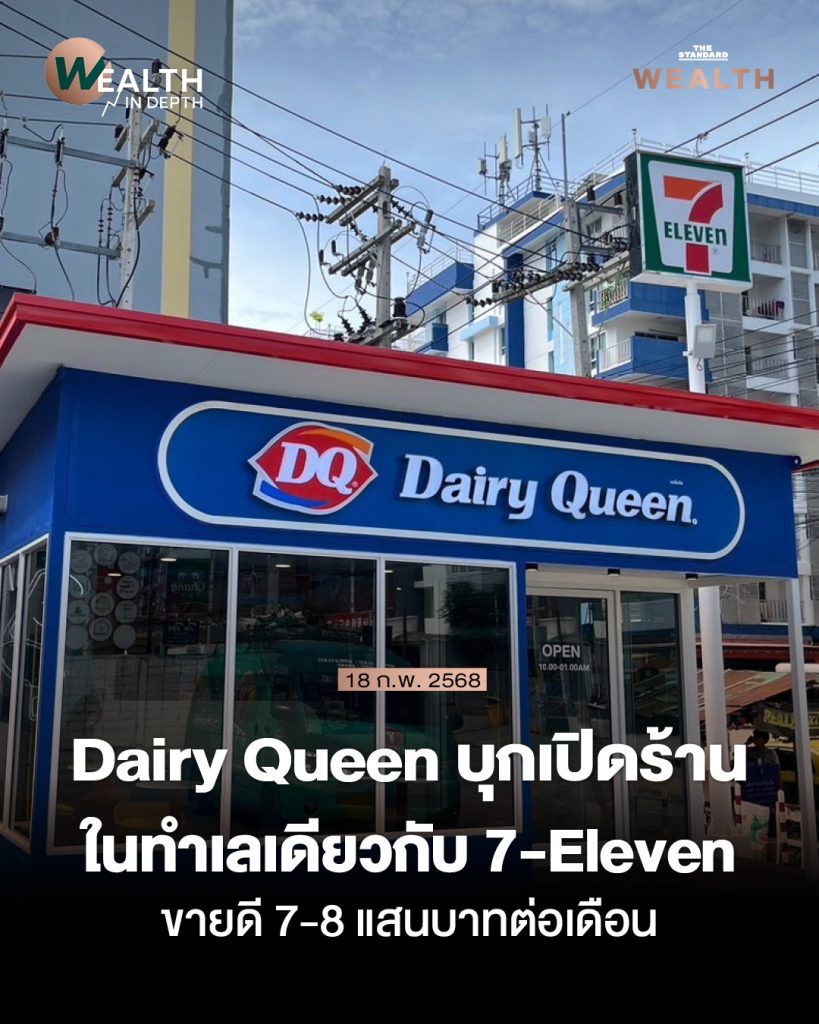
Case Study: Dairy Queen’s Success Outside the Mall
A notable example is Dairy Queen (DQ) opening locations alongside 7-Eleven, achieving monthly sales of 700,000–800,000 THB. While we are used to seeing DQ in malls, their move closer to communities makes perfect sense. Ice cream is an “Impulse Buy”—customers want it right when the craving hits without the hassle of navigating a mall. The pattern is simple: enter 7-Eleven → see Dairy Queen → make a purchase. This proves that a Standalone store with the right location, fast construction, and controlled costs can generate sales rivaling mall outlets.
Standalone + Modular Construction = Flexibility in Volatile Times
Standalone stores using Modular Construction offer:
- Independent operating hours.
- Rapid format adjustments.
- Better support for delivery services.
- The ability to expand or relocate in the future.
In a time of high costs and rapidly shifting consumer behavior, flexibility is not just an advantage—it is survival.
Conclusion
The growth of the Standalone market isn’t because malls are “getting worse,” but because the world of retail and real estate has evolved.
- Businesses are more cost-conscious.
- Consumers demand convenience and proximity.
- Brands want to control the experience and their margins.
Modular Construction is the enabler that allows Standalone stores to happen quickly, stay on budget, and scale effectively. The Dairy Queen case is clear evidence that a “prime location” today might not be the heart of a mall, but the point closest to the customer’s daily life.
Have Any Question?
เราคงไว้ซึ่งความเป็นผู้นำระดับโลกด้านแนวคิดการออกแบบก่อสร้างและการผลิตอาคารในรูปแบบต่างๆตามแนวความคิดแบบโมดูลาร์ออกสู่ตลาดโลก
- 038-320150
- 094-4832389
- info@modular-thailand.com